Letters
8
Why We Refuse to Be an Education Company
By
Navid Nathoo
When people hear what Zero does, they file it under edtech. I push back every time, and not for branding reasons. The box contains a thesis, and the thesis is wrong.
Edtech's thesis is that education is correct but poorly distributed, that the system works and just needs better delivery. So edtech digitized lectures, gamified quizzes, and put the classroom on your phone. Two decades and tens of billions of dollars later, the category's defining trait is disappointment. The founders weren't bad. They faithfully optimized a broken architecture, which is the one strategy guaranteed to preserve its flaws.
The actual problem sits upstream of distribution, in the design of human development itself, in what gets developed, how it's measured, when it starts and stops, and what it optimizes for. When the architecture is wrong, better distribution makes things worse. You ship the wrong thing more efficiently.
So here's what I mean when I say Zero isn't an education company. We start from a blueprint of what humans need rather than a curriculum. We run on demonstrated capability rather than grades and credentials. We're built for the length of a life rather than the length of a degree. And we train agency rather than compliance. Each of these is a structural choice, and none of them can be reached by iterating on school. You have to start from zero. Hence the name.
The accurate description of what we're building is infrastructure for humans. Every era builds infrastructure for the resource it values most. We built railroads for goods, grids for energy, and the internet for information, and we're now spending trillions on infrastructure for machine intelligence. The most valuable resource of this era is human potential, and its infrastructure hasn't been built. That category has no name on a market map yet. It wouldn't. The biggest companies usually looked like category errors at first.
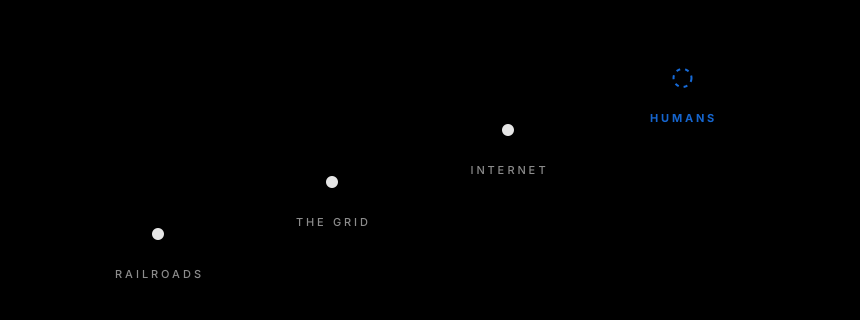
The distinction also determines what kind of company this can become. Edtech is a feature market, where tools are sold into a system someone else owns and capped by that system's budgets and imagination. Infrastructure is a platform market, where you own a layer and everything else builds on it. A school sells you education for sixteen years. An operating system for human development is something a person runs on for life, and something employers, institutions, and eventually countries depend on.
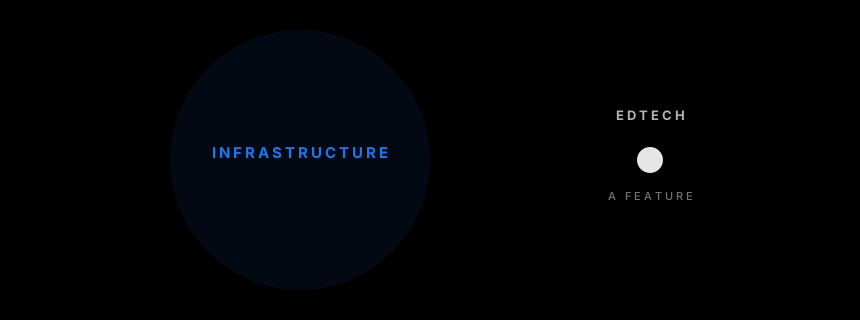
We work with universities today because that's where the pain is sharpest, and entering through pain is good strategy. But judging Zero by its first market is like judging Amazon by the bookstore. The books were the entry point. The infrastructure was the company.
The world is short humans. We're long.
—
Navid Nathoo
Founder, Zero