Principles
3
Return on You
By
Navid Nathoo
Process is about to be free. Most of what people are paid to do today is process, following a known sequence of steps to a known kind of result, and that’s exactly the work AI does well. So the value of a person doing process is collapsing toward the cost of the AI that can do it instead. What doesn’t collapse is the value of getting an actual outcome, of moving something that matters to a business. That work is getting more valuable, not less, and it’s where people still win.

This is the gap between process and outcome, and it’s wider than most people realize. You can run the process perfectly and add nothing. You can follow every step, hit every deadline, produce every deliverable on the checklist, and leave the business exactly where you found it. The process was never the point. It was a means to an outcome, and AI just made the means cheap. What’s left for humans is the part that was always the real job, which is working out what’s worth doing and making it happen.
So every scenario in Zero is built on a real-world problem with specific KPIs tied to a business objective. You’re not asked to complete a task. You’re asked to move a number the business actually cares about, and your work is judged on whether it moved. The mindset we’re training is one question asked over and over. How did I add value here, and how could I add more, to the team, to the project, to the company? That question is the difference between someone who does work and someone who creates value, and only one of them is safe in a world where the work itself is being automated.
Underneath this is something I’m not sure most people are ever told. When a company hires you, it’s making a bet on return. It pays you a salary and expects more than a salary’s worth of value back. That’s the whole logic of employment, and it’s brutally simple. Bring in less value than you cost and you’re the first thing cut when times tighten. Bring in more than you cost and you get more responsibility, more pay, more room to operate. People treat a job as a list of tasks to complete. The company treats it as an investment that has to clear a return. The people who understand which of those is true behave completely differently.
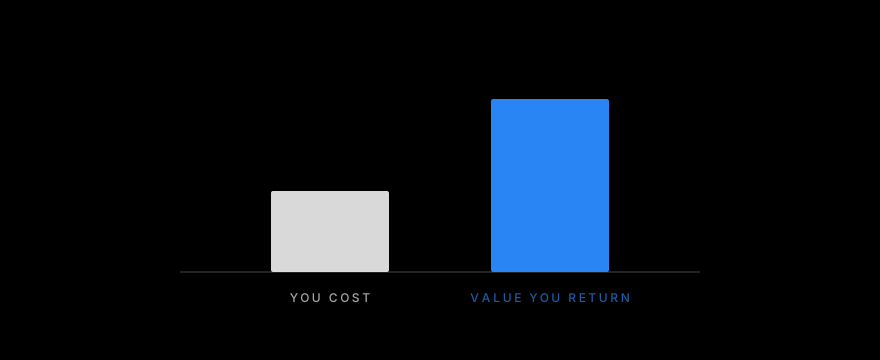
What that understanding produces is a shift in vantage point, from how an early employee sees the work to how the person running the place sees it. An early employee thinks about the task in front of them and whether they finished it. A manager thinks about whether the task mattered, whether it moved the thing the company is actually trying to move. That second way of thinking is rare, valuable, and almost never taught, and it’s the default mode of everyone who comes through Zero. They don’t ask whether they did the work. They ask whether they made an impact, and they can tell the difference between the two.
The obvious objection is that early-career people aren’t hired to think like leadership, that you’re meant to put your head down and do the work first. Maybe that held when process work was scarce and valuable. It doesn’t now. The person who only does the work is competing directly with the AI that does the work, and that’s a competition they lose on cost. The way out isn’t to do more process faster. It’s to become the person who sees what the process is for. That person was always worth more. Now they’re close to the only kind worth hiring.